
Article overview
During perimenopause, hormonal changes cause muscle to break down faster. In response, the body increases its demand for protein. When this need is not met, hunger signals persist, often leading to increased overall food intake. This helps to explain why weight gain is common during this phase: we naturally reach for quick energy foods such as sweets, snacks and simple carbohydrates.
Hence it is not a willpower issue, it is a way of body communicating a genuine nutritional need for protein.
Why Our Body Needs More Protein During This Stage?
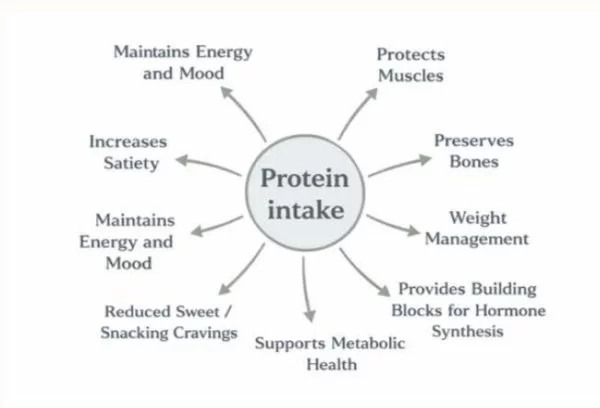
Muscle health:
As oestrogen fluctuates or remains low, muscles become less responsive to both food and exercise, this process is known as anabolic resistance. This means the protein intake that worked in your 20s and 30s is no longer sufficient. Muscle mass is lost more quickly, which can lead to reduced strength and tone even if activity levels stay the same.
Bone preservation:
Oestrogen is a powerful protector of bone. As levels decline, bone breakdown outpaces rebuilding. Protein provides the structural framework that gives bones strength and resilience. Women consuming around 1.2-1.4g of protein per kilogram of body weight per day show better bone density and a lower risk of fractures
Why Our Body Needs More Protein During This Stage?
Weight management:
During menopause, metabolism slows by around 200 calories per day, while hormonal changes increase appetite, especially cravings for carbohydrate. Hence increasing intake of protein will support weight management by:
- Increasing satiety, helping you feel fuller for longer
- Stabilising blood sugar, reducing energy crashes and snacking
- Supporting metabolic health, as muscle burns more calories at rest than fat
- Naturally suppresses ghrelin - the hunger
Energy and mood:
Adequate protein helps maintain stable blood glucose levels, leading to more consistent energy and better mood regulation, both are important especially during hormonal transition.
How Much Protein Do You Actually Need?
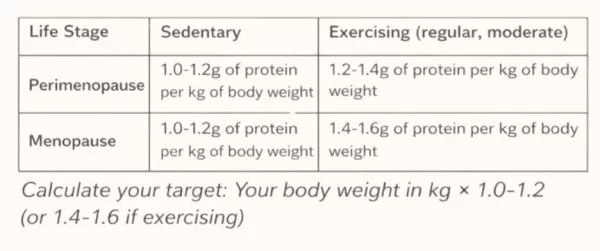
Based on the formula above you can calculate your optimum amount of protein based on your current weight. Note this is a recommended amount and does not mean to implement in one go, build up the intake gradually in your own pace, while checking with your overall wellbeing.
Refer to the next page, where you can find recommendations on what sources of protein to choose, how to start increasing protein intake and how to optimise it to ensure a better absorption.
Practical Recommendations: How to Increase Protein Intake
- Spread the intake of protein evenly across all of your daily meals.
- Aim for ~25-30g of protein every 3-4 hours across your meals to allow a comfortable time for digestion process to happen.
- Choose plant based or seafood protein source for the evening meal to support digestion and avoid ‘heavy’ feeling in the stomach.
- Avoid increasing protein intake in every meal in one day, start slowly, for example with breakfast by adding extra egg to your omelette/scrambled eggs or adding handful of nuts / nut butter into your porridge. Then when comfortable move onto lunch and add portion of chickpeas or lentils to your usual choice of meal / salad.
- Focus on complete proteins that contain all nine essential amino acids, particularly leucine, this amino acid is especially important during menopause for stimulating muscle protein synthesis. Sources of leucine are: poultry, parmesan cheese, prawns, tempeh, hemp and pumpkin seeds, almonds, chickpeas.
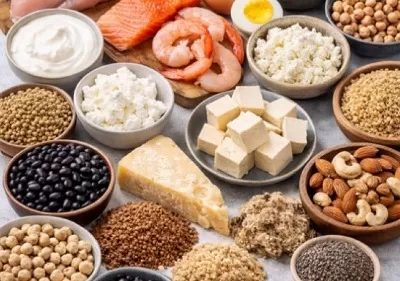
Below you can find more information on different protein sources you can incorporate into your current diet.
-
Chicken, turkey, lean beef, lean pork, duck, lamb, rabbit, tuna, wild salmon, cod, haddock, trout, sea bass, mackerel, herring, sardines, prawns
-
Cottage cheese, Greek yogurt, Skyr, feta cheese, halloumi, parmesan, cheddar, Emmental, Gruyere, standard natural yogurt
-
Lentils (red, green, black), chickpeas, beans: black, kidney, pinto, cannellini, butter, split peas, edamame
- Almonds, pistachio, cashews, hazelnuts, walnuts, Brazil nuts, hemp seeds, pumpkin seeds, sunflower seeds, chia and flaxseeds
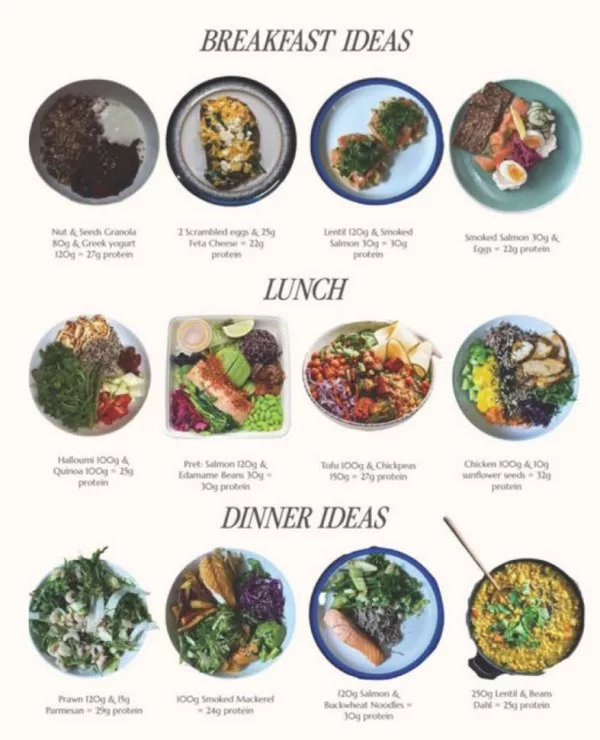
Below is a visual guide how 25-30g protein containing meals could look like for breakfast, lunch and dinner. These plates are mainly cooked by me and some are ordered from known UK cafes, to show that they can be simple ones.
Protein Works Best When Combined With
- Protein with strength training for maximum muscle support (especially important during menopause, try to aim for 2-3 trainings a week when possible)
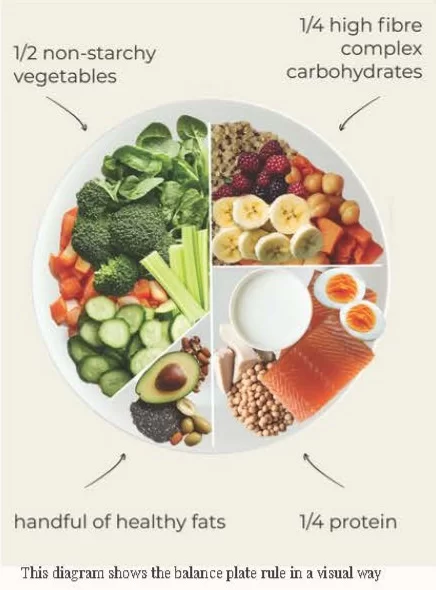
- Try to keep overall balanced nutrition: high protein does not replace the need for overall balance of the plate. Refer to balance plate diagram below.
- Consistent and quality sleep: protein synthesis occurs during rest, consistent bedtime (falling asleep and waking up at the same time) and quality sleep is essential for these changes to take effect
Note: this information provides a strong, evidence-based starting point and reflects general recommendations. Individual needs may vary. For personalised guidance tailored to your health history, medications, and goals, consider working with a nutritional advisor.