
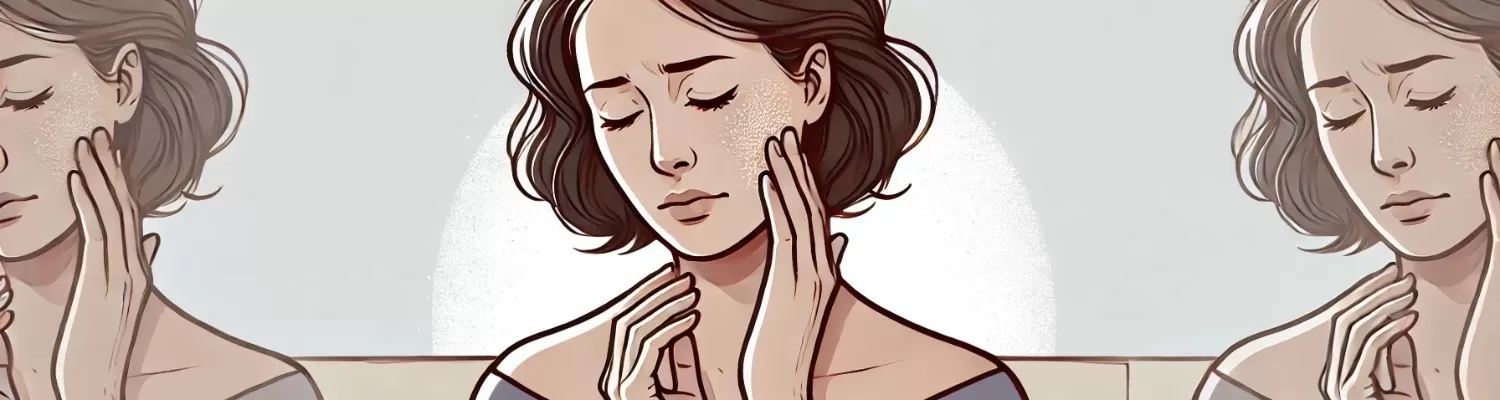
Skin Burning & Irritation overview
You expect certain things from menopause: hot flushes, night sweats, maybe a slight brain fog. What you might not expect is waking up one morning with skin that feels raw, or stepping out of the shower only to find that your once-trusty moisturiser now stings. It can feel disorienting – like your body has suddenly rewritten the rulebook without telling you.
This matters because skin irritation is not just about physical discomfort. When burning or itching interrupts sleep, confidence, or the simple act of pulling on a favourite jumper, the knock-on effects are real. Women often tell me it feels invisible to others but impossible to ignore themselves – a constant hum of irritation that chips away at focus, energy, and ease. It can even cause unnecessary anxiety, with many wondering if something more serious is happening beneath the surface.
The good news? These changes are both explainable and manageable. By understanding what is happening under the skin, spotting common triggers, and knowing which remedies genuinely help, you can take back control. Whether that means tweaking your daily routine, exploring advanced skincare options, or speaking with a specialist about treatments, there are clear paths forward. Relief is possible – and so is feeling comfortable in your own skin again.
So let’s start with the basics: why does menopause affect the skin in the first place?
Why skin feels different during menopause
Skin irritation or burning during menopause can feel baffling. One day, your skin behaves as it always has, the next, it stings after a shower or feels uncomfortably tight under your jumper. Many women describe it as if their body suddenly became more sensitive overnight – and it often takes them by surprise.
A lesser-known but common symptom
-
While hot flushes and mood changes get most of the headlines, skin irritation is a frequent companion in perimenopause and menopause.
-
Burning, itching, and dryness are linked to declining oestrogen, which plays a key role in keeping the skin hydrated and resilient.
-
Patients often mistake these changes for allergies or new skin conditions before realising the hormonal connection.
Why it matters for everyday life
-
Constant irritation affects comfort, sleep, and confidence.
-
Simple activities – a hot bath, slipping into wool, or sitting in a centrally heated room – can suddenly trigger discomfort.
-
Recognising menopause as the underlying cause helps avoid unnecessary worry and directs you towards the right solutions.
In short, if your skin feels different, you’re not imagining it. These changes are a recognised part of the menopause journey and are worth addressing.
What is happening under the skin? The science of menopause and irritation
When skin begins to burn, itch, or feel unusually sensitive during menopause, there’s an apparent biological reason. Understanding what’s happening beneath the surface helps take away some of the fear and mystery.
Hormonal shifts affect the skin barrier.
-
Declining oestrogen reduces the skin’s natural production of collagen, elastin, and oils.
-
This leads to dryness, thinning, and a weaker barrier, which makes the skin more prone to irritation from soaps, fabrics, and even water temperature.
-
Patients often notice that their once “normal” skincare routine suddenly feels harsh or stings.
Nerve sensitivity and neuropathic sensations
-
Hormonal changes can also influence the nervous system, creating prickling, tingling, or burning sensations without an unmistakable rash.
-
Some women describe it as feeling like tiny sparks or static under the skin.
-
These symptoms are often temporary but can be unsettling, especially when they appear at night.
Peri-menopause vs post-menopause
-
During peri-menopause, fluctuating hormones can cause symptoms to come and go unpredictably.
-
Post-menopause, the lower baseline of oestrogen often means persistent dryness and sensitivity.
-
Recognising the stage you’re in can help guide treatment choices, from moisturisers to hormone replacement therapy (HRT).
Skin irritation in menopause isn’t random – it’s the result of measurable changes in hormones, skin structure, and nerve response. Knowing this makes it easier to take practical steps instead of worrying that something more sinister is at play.
How skin irritation shows up: common symptoms and sensations
Once you know the science, the next step is recognising how it plays out in real life. Skin irritation in menopause doesn’t look the same for everyone – and that unpredictability can be part of what makes it frustrating.
Familiar sensations you might notice
-
Dryness and tightness – skin can feel papery, especially after cleansing or showering.
-
Itching and prickling – often worse at night or after being in a heated room.
-
Burning or stinging – sometimes triggered by skincare products that used to feel fine.
-
Crawling or tingling feelings – described as “ants under the skin” by some women.
Every day triggers that make it worse
-
Hot showers, baths, or saunas can strip natural oils and intensify burning.
-
Rough fabrics like wool or synthetics may suddenly feel unbearable.
-
Stress, caffeine, or alcohol can heighten nerve sensitivity.
-
Central heating or air conditioning dries the air and aggravates already delicate skin.
When it might be something else
-
A sudden rash, spreading redness, or blistering could signal infection, allergy, or another skin condition.
-
Persistent irritation in one spot rather than across the body may need closer medical assessment.
-
If over-the-counter remedies don’t help after a few weeks, it’s worth seeking professional advice.
Recognising these patterns helps you separate menopause-related changes from other possible causes. And once you can name what you’re experiencing, you can start finding ways to get relief.
Practical relief: what actually helps
Knowing that menopause can make your skin burn, itch, or tingle is one thing. Figuring out what actually helps is another. The good news: there are simple, effective steps that can bring noticeable relief – often without overhauling your entire routine.
Gentle skincare makes a big difference
-
Switch to fragrance-free, non-foaming cleansers and moisturisers with ceramides or hyaluronic acid.
-
Apply emollient creams or ointments straight after bathing to lock in moisture.
-
Avoid harsh scrubs or acids if your skin feels raw or stings on contact.
Lifestyle tweaks to ease discomfort
-
Keep showers lukewarm instead of hot – heat strips away natural oils.
-
Choose soft, breathable fabrics like cotton over wool or synthetics.
-
Stay hydrated; even mild dehydration can worsen dryness and irritation.
-
Manage stress with practices like yoga or meditation, which may also reduce flare-ups.
Over-the-counter and medical support
-
Emollients and soothing gels (such as aloe vera) can calm inflamed skin.
-
Antihistamines may help with itching but should only be used under guidance.
-
Hormone Replacement Therapy (HRT) can improve skin hydration and elasticity for some women – worth discussing with your GP.
-
Prescription treatments, from topical steroids to nerve-calming medications, may be considered in persistent cases.
Relief often comes from layering small changes rather than relying on one “miracle cure.” With the right mix of skincare, lifestyle, and medical support, most women find their symptoms ease significantly.
When to see a GP or specialist
Most menopause-related skin irritation is manageable at home, but there are times when it’s essential to seek professional support. Knowing the difference helps you feel safe rather than second-guessing every new sensation.
Red flags you shouldn’t ignore.
-
Persistent rashes that don’t improve with gentle care.
-
Spreading redness, blistering, or open sores.
-
Burning or itching combined with fever or feeling unwell.
-
Sudden or severe changes in one area of skin.
What to expect at your appointment
-
Your GP will take a history of your symptoms, triggers, and skincare routine.
-
They may run simple tests to rule out infections, allergies, or autoimmune conditions.
-
If symptoms point strongly to menopause, discussion may include HRT or referral to a dermatologist.
Advocating for yourself
-
Be clear about how symptoms affect daily life – sleep, mood, confidence.
-
You can keep a diary of triggers and flare-ups to share at your appointment.
-
If you feel your concerns are dismissed, please feel free to ask for a second opinion or referral.
Getting medical input can save you from months of discomfort and provide reassurance that nothing more serious is going on. A specialist can also tailor treatment, which often leads to faster, longer-lasting relief.
The emotional side: skin, self-image, and everyday life
It’s easy to dismiss skin irritation as a “minor” symptom, but living with it day after day tells a different story. Burning, itching, or prickling can seep into every corner of daily life – not just how your skin feels, but how you feel in yourself.
How irritation affects confidence and comfort
-
When your skin stings after a shower or your jumper feels like sandpaper, it’s hard to relax.
-
Night-time itching or burning can rob you of sleep, leaving you tired, irritable, and less resilient the next day.
-
Some women avoid social situations or their favourite clothes because discomfort makes them self-conscious.
The invisible burden
-
Unlike hot flushes, which are often visible, skin irritation may not be evident to others.
-
Friends or family might not understand why you’re distracted or short-tempered, which can feel isolating.
-
Constant low-level discomfort can chip away at mood and motivation over time.
Reclaiming comfort with small rituals
-
Swapping scratchy fabrics for soft cotton or bamboo can make a surprising difference.
-
Creating a calming bedtime routine with moisturising, herbal tea, and a cool bedroom helps reduce flare-ups and promote restful sleep.
-
Gentle self-care isn’t just about skin – it’s about signalling to yourself that you deserve comfort and ease.
Skin symptoms during menopause are physical, yes, but they carry an emotional weight too. Acknowledging that impact is the first step in finding strategies that restore not only your skin health but also your sense of self.
Conclusion
Menopause can change the way skin feels as much as the way it looks, and for many women, that shift is unexpected. What matters most is recognising that irritation, burning, or sensitivity are not just passing quirks but fundamental, hormonally driven changes that deserve care. Once you understand the biology and identify your triggers, minor adjustments in skincare and lifestyle can make an enormous difference to comfort and confidence.
Equally important is knowing when to ask for help. A GP or specialist can rule out anything more serious and guide you towards treatments – from hormone support to tailored skincare – that restore balance. And it is worth remembering: taking steps to feel comfortable in your own skin is not indulgence, it is part of your overall health and wellbeing.
If your skin has started telling a new story and you are not sure what comes next, start with something simple. Explore trusted resources, speak with a qualified practitioner, or try a few gentle changes at home. Relief and reassurance are possible, and the sooner you take that first step, the sooner you can get back to feeling like yourself again.
Frequently Asked Questions
Can hydration levels really change irritation?
Does HRT always improve menopause skin problems?
Why does menopause make skin feel like it is crawling?
Can exercise reduce menopause-related skin irritation?
Do supplements help with menopause skin sensitivity?
Is it normal for irritation to come and go during perimenopause?
Can skincare with retinol be used during menopause?
Should I avoid exfoliation during menopause skin irritation?
Are natural remedies effective for menopausal skin burning?
Can hormone therapy help with skin irritation during menopause?
How long does menopause-related skin irritation usually last?
Is burning skin at night linked to hot flushes?
Can stress make menopausal skin irritation worse?
Are professional skin treatments safe during menopause?
Does diet affect skin irritation during menopause?
Can menopause cause sudden sensitivity to skincare products?
Is skin irritation during menopause permanent?
Are there any natural remedies for soothing burning skin?
Practitioner information
Are you a practitioner? If you'd like to link your practice to Skin Burning & Irritation and become part of The Menopause Network, you can register as a verified specialist using the information on our specialist registration page.
Once verified, your profile can feature Skin Burning & Irritation alongside the other symptoms and treatments you support, helping patients searching The Menopause Network find you directly.